
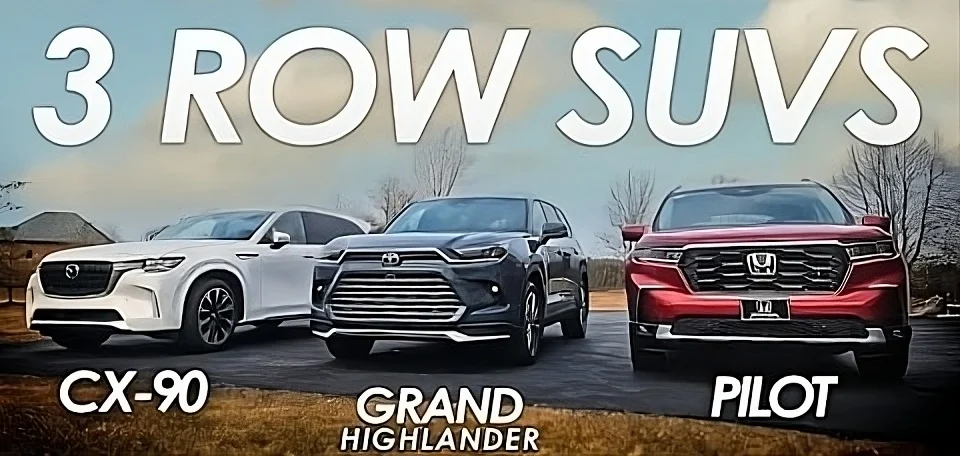
Canadian families shopping for three-row SUVs face an excellent selection in 2025, with the Honda Pilot, Toyota Highlander, and Mazda CX-9 leading the mid-size segment. Each offers distinct advantages, but which delivers the best combination of space, features, reliability, and value for Canadian driving conditions?
We’ve spent extensive time with each vehicle, evaluating them through Canadian winters, family road trips, and daily commuting to provide this comprehensive comparison.
Design and First Impressions
Honda Pilot: Bold and Functional The redesigned Pilot adopts Honda’s truck-inspired design language, creating a more rugged appearance than previous generations. The boxier styling maximizes interior space while improving aerodynamics. LED lighting comes standard across all trims, with the higher Touring trim featuring adaptive headlights.
Interior quality impresses with soft-touch materials throughout the cabin. The dashboard layout prioritizes functionality over flash, with clearly labeled controls and excellent ergonomics for Canadian families wearing bulky winter clothing.
Toyota Highlander: Refined and Reliable Toyota’s conservative styling approach results in a handsome, if unremarkable, exterior design. The Highlander’s strength lies in its attention to detail and build quality rather than bold styling statements.
Inside, the Highlander feels more premium than competitors, with high-quality materials and excellent fit and finish. The infotainment system’s physical controls provide welcome relief from touch-only interfaces during winter driving with gloves.
Mazda CX-9: Premium Styling on a Budget The CX-9 punches above its price point with sophisticated exterior styling and a premium interior that rivals luxury brands. Signature LED lighting and elegant proportions make this the most attractive option in the comparison.
The interior showcases Mazda’s attention to detail with genuine wood trim, premium leather seating, and intuitive control placement. However, the third row feels tighter than competitors, limiting its family utility.
Performance and Fuel Economy
Honda Pilot: Smooth V6 Power The Pilot’s 3.5-liter V6 produces 285 horsepower and 262 lb-ft of torque, providing confident acceleration and smooth highway cruising. The 10-speed automatic transmission shifts seamlessly, though occasionally hunts for the optimal gear during city driving.
All-wheel drive comes standard on Canadian models, with intelligent traction management adjusting power distribution based on conditions. The system performed admirably during our winter testing, providing confidence on snow-covered mountain passes.
Fuel economy: 10.2L/100km city, 8.4L/100km highway, 9.4L/100km combined
Toyota Highlander: Hybrid Efficiency Leader The Highlander Hybrid’s 2.5-liter four-cylinder paired with electric motors produces 243 total system horsepower. While less powerful than the Pilot, the hybrid system provides instant electric torque that feels responsive in real-world driving.
Toyota’s AWD system includes terrain select modes optimized for Canadian conditions, including snow and mud settings. The hybrid system’s all-wheel drive operates differently than traditional mechanical systems, using a separate electric motor for rear wheel power.
Fuel economy: 7.2L/100km city, 7.8L/100km highway, 7.5L/100km combined (Hybrid)
Mazda CX-9: Turbocharged Efficiency The CX-9’s 2.5-liter turbocharged four-cylinder produces 250 horsepower on premium fuel (227 on regular), with 320 lb-ft of torque providing strong acceleration. The engine delivers refined power delivery with minimal turbo lag.
Mazda’s i-ACTIV AWD system uses predictive technology to adjust power distribution before wheel slip occurs, providing excellent winter confidence. The system feels more sophisticated than competitors during mixed road conditions.
Fuel economy: 10.7L/100km city, 8.7L/100km highway, 9.8L/100km combined
Interior Space and Family Features
Honda Pilot: Maximum Space Utilization The Pilot excels in passenger space across all three rows, with genuinely usable third-row seating for adults on longer trips. Second-row captain’s chairs (standard on higher trims) provide excellent comfort and easy third-row access.
Cargo space leads the segment with 547L behind the third row, expanding to 1,583L with second and third rows folded. Multiple storage compartments throughout the cabin accommodate Canadian families’ winter gear and sporting equipment.
Family-friendly features include:
- Available built-in vacuum system
- Rear entertainment system with wireless streaming
- Multiple USB charging ports throughout cabin
- Conversation mirror for monitoring rear passengers
Toyota Highlander: Balanced Practicality The Highlander offers competitive space in the first two rows, though third-row accommodations suit children better than adults. Second-row seating options include a bench or captain’s chairs depending on trim level.
Cargo capacity measures 454L behind the third row, adequate for family needs but trailing the Pilot. Build quality and material durability excel, important considerations for families planning long-term ownership.
Notable Family Features:
- Toyota Safety Sense 2.0 standard across all trims
- Available bird’s eye view camera system
- Rear-seat reminder system
- Multiple 12V and USB charging options
Mazda CX-9: Premium Feel, Compact Reality The CX-9’s premium interior impresses, but space limitations become apparent with three rows of passengers. The third row works for children but feels cramped for teenagers or adults on longer journeys.
Cargo space measures just 407L behind the third row, requiring careful packing for family trips. However, material quality and interior sophistication exceed competitors at similar price points.
Standout features include:
- Bose premium audio system (available)
- Head-up display
- Premium leather seating surfaces
- Apple CarPlay and Android Auto integration
Safety and Technology
All three vehicles earn top safety ratings, but approach technology integration differently:
Honda Pilot: Honda Sensing suite standard, with adaptive cruise control and collision mitigation. Available hands-free highway driving capability on higher trims.
Toyota Highlander: Toyota Safety Sense 2.0 includes pre-collision system, lane departure alert, and dynamic radar cruise control. Conservative approach prioritizes reliability over cutting-edge features.
Mazda CX-9: i-ACTIVSENSE safety suite includes blind spot monitoring, rear cross-traffic alert, and adaptive cruise control. Head-up display provides excellent information without driver distraction.
Pricing and Value Analysis
Honda Pilot Pricing (CAD):
- Sport: $49,400
- EX-L: $54,900
- Touring: $59,400
- Elite: $63,900
Toyota Highlander Pricing (CAD):
- LE: $47,150
- XLE: $51,450
- Limited: $57,950
- Platinum: $62,450
Mazda CX-9 Pricing (CAD):
- GS: $43,200
- GS-L: $47,200
- GT: $51,200
- Signature: $56,200
Verdict: Which SUV Wins for Canadian Families?
Choose the Honda Pilot if: Maximum interior space and cargo capacity are priorities. The Pilot excels for large families, road trips, and hauling equipment. Strong resale value and dealer network support make this the practical choice.
Choose the Toyota Highlander if: Fuel economy and long-term reliability are most important. The hybrid powertrain delivers exceptional efficiency, while Toyota’s reputation for durability provides peace of mind for long-term ownership.
Choose the Mazda CX-9 if: You want premium features and styling at a more accessible price point. The CX-9 offers the most sophisticated interior and engaging driving experience, though with some space compromises.
For most Canadian families, the Honda Pilot’s combination of space, features, and all-weather capability makes it the most versatile choice. However, the Highlander Hybrid’s efficiency advantages and Toyota’s reliability reputation make it compelling for long-term ownership, while the CX-9 appeals to buyers prioritizing style and driving enjoyment over maximum utility.
Each vehicle excels in different areas, but all three provide excellent options for Canadian families seeking capable, feature-rich three-row transportation.